In the courtroom, clarity is power. No matter how sound a legal argument may be, if a jury doesn’t fully understand it — or can’t remember it — the advantage is lost. That’s why graphics aren’t just decoration in a trial presentation; they’re strategic tools that can sway outcomes.
Visuals speak the language of jurors. The human brain is wired to process and retain visual information far more efficiently than text or speech. In an era where jurors consume data through infographics, animation, and multimedia daily, legal teams that embrace high-quality graphics gain a measurable edge.
Visuals Are Processed Faster — Much Faster
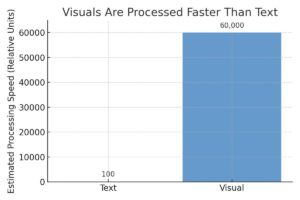
A well-cited study by 3M Corporation found that the brain processes visuals up to 60,000 times faster than text. In trial settings where attorneys are navigating complex case law, timelines, or technical subject matter, graphics can instantly clarify what words alone cannot.
Visuals Improve Retention and Persuasion
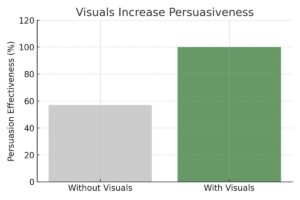
According to the University of Minnesota, presentations using visuals are 43% more persuasive than those without. That difference can mean the tipping point in close litigation.
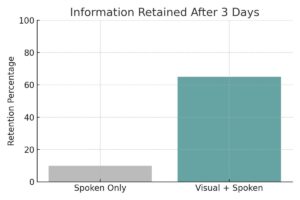
Even more compelling, research from the Dingley Research Group shows that when jurors hear information, they retain only 10% of it after three days. But when that same information is presented with relevant visuals, retention jumps to 65%.
In trial terms: jurors won’t remember every argument — but they will remember the timeline you animated, the diagram you simplified, or the sequence of events you illustrated clearly.
Why Visual Learning Matters in Courtrooms
Most jurors aren’t lawyers. They’re professionals, parents, and citizens being asked to evaluate nuanced legal theories, expert testimony, and large volumes of evidence. Relying solely on oral argument or lengthy documents creates cognitive overload — the enemy of comprehension.
Well-designed trial graphics break down complexity, keep the jury focused, and reinforce your themes. They work not because they’re flashy, but because they serve a strategic purpose: to make the case easy to follow and hard to forget.
A Strategic Advantage for Legal Teams
While opposing counsel may rely on bullet-point slides or outdated clip art, professional trial graphics transform a presentation into a narrative. This isn’t about technology — it’s about storytelling.
Mock trials, in particular, offer a unique opportunity to test visual strategies. Graphics can reveal where jurors are confused or disengaged, allowing legal teams to refine their approach before ever stepping into court.
The Takeaway
Trial graphics aren’t optional — they’re essential. They don’t just dress up a case; they distill it, clarify it, and deliver it in a form jurors instinctively understand. In an environment where decisions hinge on understanding, the team that communicates best often wins.
For firms preparing for high-stakes litigation or refining their mock trial strategies, investing in purposeful, high-quality visuals can make all the difference.